Making Product Claims is So Easy, A Caveman Could Do It
What the small business owner has never been taught about making product claims in advertising copywriting.

A unique selling proposition.
It is often called a USP in marketing jargon, and it describes a claim or selling point that makes your company’s product or service stand out from the competition.
Contrary to popular belief, USPs do not have to be grandiose, and overly persuasive statements without basis.
It can be as simple as looking at your product, seeing what it does. Then, you look at what everybody else is doing. What does your product do better? What makes it stand out. Often times, marketers, advertisers, and founders get competitive with their products, insisting that their brand is “better” than their competitors. They try to advertising unique selling propositions by bashing the competitors and making unfounded claims about their product. The entrepreneur ecosystem is laced with bros telling you that you need to be tough and competitive. That might make you feel good, but, that’s not going to sell anything.
For instance, let’s say that you sell carbonated lemon-lime fermented drinks.
You could go the first choice and compete in competitive lemon-lime soda market, but you’ve already differentiated your product because it is fermented. So, you already know that people are going to be buying the drink based off of the benefits.
Think about an advertising slogan.
Whether they like it or not, companies who are producing carbonated sodas that are fermented, or made with herbs are competing with the major soda brands, because they are seen as alternatives. You have a healthier alternative to the leading lemon-lime carbonated sodas. These companies are still lagging when compared to the profits of big soda. Would you want to make the claim that your drink is better tasting than the top leading brands? That’s going to be a bold claim. Instead, ask yourself how your carbonated drink is different from from the big soda brands, and use that in your advertising pitch.
Use your observational skills.
- Does your carbonated drink use stevia instead of high fructose corn syrup?
- Does your drink have fermented cultures or probiotics?
- Does your drink have a hint of some other ingredient, like ginger?
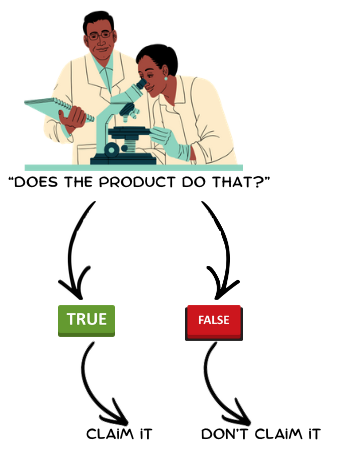
When you take these steps, then you are beginning to find your unique value proposition. Your advertising should communicate what makes the ad stand out.
In fact, if a quality makes it stand out enough, you can even use that as the headline. Differentiation can be a very effective strategy, and it is a strategy that begins with you and your marketing or advertising team.
Don’t have an advertising team? Contact the Copywriter Source Today for an effective copywriting strategy for your advertising and marketing channels.

You make an advertisement using a photo of your probiotic soda, and you write “it’s fermented”.
This stands out because most soda isn’t fermented and has high amounts of sugar without any nutritional benefits. No need to talk like a cool dude or make people laugh, here. You make it simple and true.
There’s a purpose here.
A lot of people who love the flavor of soda do not buy the drink often because the product may have too much sugar for them.
People who don’t want a lot of sugar want to be able to enjoy a fizzy drink without worrying about health, and may actually help support it by avoiding tons of sugar and gaining the benefit of probiotics. drink will likely have less sugar in it, or use something like stevia, and is fermented.
Highlight Benefits and Avoid Vague Fluff
Now, what you don’t want to do as a small business is write something stupid on an ad. Big companies can afford to do that, but sometimes ads can be so ridiculous, that it negatively affects sales even with big businesses.

This is the kind of thing that most copywriters are doing today. Look at the image on the left. This is the kind of thing that you see a lot of with new copywriters. They are too distracted by what the current corporate zeitgeist is doing with copywriting, that they don’t think about the fundamentals of what sells products. They’re more worried about attention than about communication.
Yes, “awesome dude” does grab attention, but then what? “Awesome dude” does not describe benefits.
If you can’t figure out what “and then what” is, then don’t use it.
Companies come and go that use guerilla marketing techniques and crass headlines, or even confusing ones. Don’t do that. Going the traditional route is better, especially if you are a smaller company. The purpose of copywriting isn’t to sound cool, it is to tell people what the product does. Always tell people about the product. A seed can’t start out as the entire plant. It has to grow.
I’m not bashing having feel-good ads that are fun, but sometimes it is not appropriate for smaller companies and startups. Making fun, humorous ads should be used if you are good at humor, and if you are a medium-sized company or beyond. Big companies like Geico can make very well-crafted humorous ads about a Gecko without saying a thing about insurance. But, is your company as well-known as Geico?
You’re not selling the product to get attention. You’re selling the product because there is a segment out there who wants the product. You’re making the product for them, not just to have another product out there. People are not buying your product because you invented it. They want to buy it because of its value.
Copywriting isn’t about persuasion. It’s about communication, and telling people what your product does in the most effective way possible. What makes your product stand out can be something that is very simple.
